
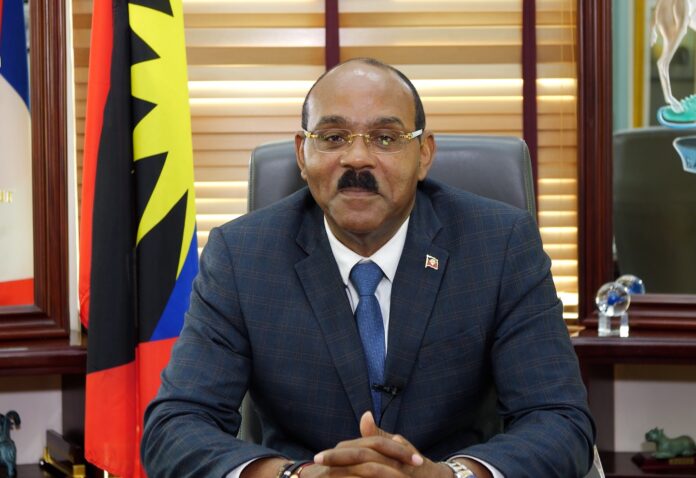

Antigua and Barbuda’s economy is now expected to grow by between 3.5% and 4%, below the government’s earlier projection of 5% to 6%, Prime Minister Gaston Browne has said.
Browne said the economy continues to expand despite global instability and mounting pressures facing small developing states.
“Luckily for us, we continue to keep our country’s economy stable,” Browne said. “The economy is still expanding, though it’s not growing at the rate that we would love.”
The prime minister identified rising energy costs as one of the major challenges confronting Antigua and Barbuda.
He said the government had expected international conflicts to ease and energy prices to decline, but those expectations have not materialised.
Despite the slower pace of growth, Browne said Antigua and Barbuda continues to make economic progress.
Prime Minister Gaston Browne says Antigua and Barbuda’s economy is continuing to expand, but growth has slowed below the government’s earlier expectations.
Browne said the government had projected economic growth of between 5% and 6%, but now believes the rate is closer to 3.5% to 4%.
“We continue to keep our country’s economy stable,” Browne said. “The economy is still expanding, though it’s not growing at the rate that we would love.”
The prime minister made the disclosure while discussing the effect of global instability on Antigua and Barbuda and other small economies.
He said many countries are experiencing economic contraction, while Antigua and Barbuda continues to make progress despite facing several challenges.
Browne identified high energy costs as one of the most significant pressures confronting the country. He said the government had expected international conflicts to end sooner and global oil prices to decline, but those expectations have not materialised.
According to Browne, the government continued subsidising fuel at the pump to protect consumers from the full effect of rising prices. However, he said that policy had become financially unsustainable.
The prime minister said the government would ordinarily collect between EC$3 million and EC$4 million monthly in fuel-related revenue. Instead, it gave up an estimated EC$24 million in revenue over six months and accumulated at least EC$15 million in debt to the West Indies Oil Company.
He estimated the combined financial impact at nearly EC$40 million.
Browne warned that the losses could reach EC$100 million within months if the government continued subsidising fuel at the same level while international oil prices increased.
Despite those pressures, the prime minister maintained that Antigua and Barbuda’s economy remains stable and continues to grow, although at a slower pace than initially projected.
This article was originally published by Antigua News Room. Read the original article here: VIDEO: Antigua and Barbuda’s Economic Growth Forecast Cut to 3.5%–4%.