

In a detailed statement issued Wednesday, the association called on Browne to withdraw the threat and publicly affirm that immigration or other executive powers will not be used to influence, intimidate, punish or remove a judicial officer because of decisions made in the lawful exercise of judicial duties.
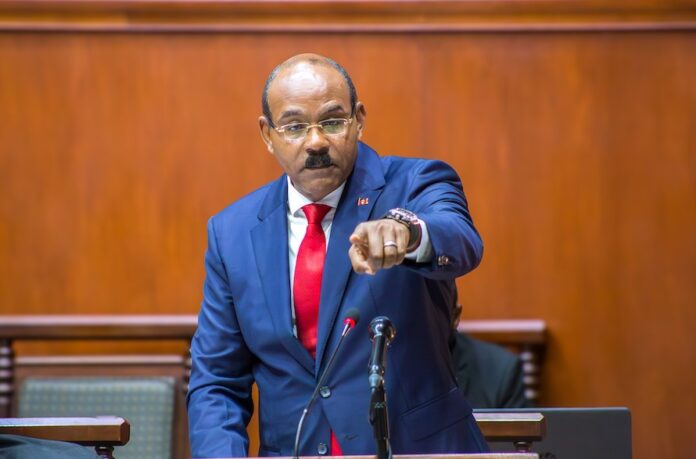
The controversy stems from comments Browne made during a national security meeting Sunday while addressing an increase in gun crime and violence and what he considers inadequate sentences imposed by the courts.
According to the association, Browne referred to a “particular judge who has a propensity to give criminals a break” before directly addressing the unnamed judge.
“Brother man, if you cannot follow the lead of parliament to give longer sentences, leave our country voluntarily otherwise we are going to deport you and make you persona non grata. You know who you are. This is the Prime Minister of the country saying this,” Browne was quoted as saying.
Although the prime minister said he did not intend to interfere with the judiciary, the association said that assurance could not be reconciled with a threat of deportation.
“The Antigua and Barbuda Bar Association considers that the Honourable Prime Minister’s statement constitutes a grave threat to the independence of the judiciary and is incompatible with the constitutional separation of powers, and the rule of law,” the association said.
The ABBA stressed that Antigua and Barbuda’s Constitution is the supreme law and that both Parliament and the executive are bound by its provisions.
It said the separation of powers is a fundamental principle of the Westminster system upon which Antigua and Barbuda’s Constitution is based, and Parliament cannot transfer judicial functions to an executive body that is not qualified to exercise judicial powers.
The association said determining the severity of a sentence imposed on a convicted offender is a judicial function and must remain in the hands of the courts.
“A judge who imposes a sentence in accordance with the law, including the Sentencing Guidelines, and the evidence before the court is performing precisely the constitutional function that the separation of powers requires of the judiciary,” the statement said.
The association argued that Browne’s comments effectively treated judicial independence as insubordination and amounted to the type of executive intrusion into judicial authority that the separation of powers is intended to prevent.
It reserved particularly strong criticism for the threat to deport the judge and designate the individual persona non grata.
The ABBA said such a threat, when directed at a judge because of the exercise of judicial discretion, represents an attempt by the executive to coerce the judiciary.
“A judge who faces the prospect of expulsion from the jurisdiction for delivering judgments within its discretion, that displeases the executive cannot be said to be independent,” the association said.
It added that judges must be able to decide cases according to law without fearing personal consequences imposed by the executive branch.
The association warned that the implications extend beyond the individual judge, arguing that threatening a member of the judiciary with removal from the country sends a message to the wider judiciary that continued tenure and residence could depend on complying with executive preferences.
It described that prospect as “antithetical to the rule of law” and the constitutional framework governing the country’s courts.
The ABBA acknowledged that Parliament has a legitimate role in determining sentencing policy and can legislate to establish minimum or maximum sentences, provided those measures comply with constitutional requirements.
It also accepted that the executive may advocate for tougher sentencing through the legislative process.
However, it said there is a critical distinction between changing sentencing laws through Parliament and attempting to direct individual judges on the sentences they should impose.
“What Parliament and the executive may not do is direct individual judges, by threat or coercion, to impose sentences of a particular length in particular cases,” the association said.
It said Browne’s comments fell “squarely on the wrong side” of the distinction between lawful legislative advocacy and unconstitutional executive coercion of the judiciary.
The association also pointed out that the appointment, tenure and removal of judges are governed by the Supreme Court Order, Cap 422A, the Judicial and Legal Services Commission, applicable rules and regulations, and the Constitution.
“In all cases, the law requires due process,” it said.
The ABBA acknowledged that the prime minister’s remarks could be characterized as political rhetoric rather than a formal legal act and noted that no concrete action has been taken to deport the judge or declare the individual persona non grata.
But it said the constitutional harm does not depend on whether the threat is ultimately carried out.
“A public threat by the head of government, directed at the judiciary, is itself an act of executive coercion that undermines judicial independence and the rule of law,” the association said.
It warned that such statements could have an immediate “chilling effect” on the judiciary, irrespective of whether the threatened action eventually occurs.
The association said concerns over sentencing should instead be addressed through legislation, lawful appellate proceedings and established constitutional and institutional channels.
“The ABBA calls upon the Prime Minister to withdraw the threat and publicly affirm that no immigration or other executive power will be used to influence, intimidate, punish or remove a judicial officer because of decisions made in the lawful exercise of judicial office,” the statement said.
It added that such threats “severely undermine the Rule of Law and the established safeguards and procedures of the Supreme Court, its independence and impartiality.”
The association concluded by reiterating its support for the judiciary “as an independent arm of government acting without fear or favour.”
The statement was dated Aug. 12 and issued by the Antigua and Barbuda Bar Association, the professional body established under the Legal Profession Act, 2008.
This article was originally published by Antigua News Room. Read the original article here: Bar Association Condemns PM’s Deportation Threat Against Judge as Attack on Judicial Independence.