
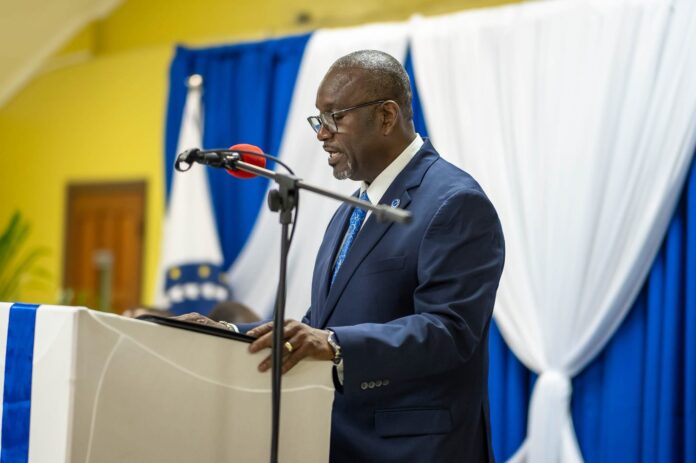

Artificial intelligence is already affecting Antigua and Barbuda’s workforce, and workers must be prepared to adapt as the technology transforms jobs, Antigua and Barbuda Workers’ Union General Secretary David Massiah has warned.
Speaking at the ABWU’s 59th Annual Delegates Conference, Massiah said AI was no longer a concept confined to science fiction, technology conferences or the distant future.
“AI is here, and it is real,” he said.
Massiah said the technology was entering workplaces, changing how information is processed, how services are delivered and how employees perform their duties. He warned that it could ultimately change the definition of work itself.
Some jobs will change, while employees in affected sectors will have to acquire new skills or retrain for different roles, he said. Massiah acknowledged that the full effect of AI on the local economy and labour market remains uncertain.
However, he said workers could no longer assume their livelihoods would remain unaffected.
“We can no longer say that, as workers, our livelihood would not be affected by AI,” Massiah said. “It has already started to affect the workforce.”
He urged trade unions and their members to approach the technology with neither fear nor blind optimism. Instead, he said, workers should develop AI literacy, strengthen durable human skills and commit to continuous learning as job requirements evolve.
Massiah identified analytical reasoning, problem-solving and active listening as increasingly important workplace skills. He also called for a shift away from the idea that one set of qualifications could sustain a worker throughout an entire career.
Workers and unions must be involved in discussions and decisions concerning the introduction of AI in the workplace, he said. They should also have a role in determining what training is provided and what safeguards are established to ensure technological changes are implemented fairly.
Massiah said shop stewards would have an increasingly important responsibility to educate and represent members as workplaces evolve. He also encouraged unions to draw on the skills and knowledge of younger workers, many of whom are more familiar with emerging technology.
The general secretary said the ABWU must examine whether it is communicating effectively, providing members with timely information and training, using technology to improve its services and developing future leaders.
While technology could assist unions and workers in several areas, Massiah said it could not replace the collective strength that remains central to trade unionism.
He called for stronger collective bargaining, improved union education and greater cooperation among workers to ensure they have a meaningful role in shaping the future of employment.
“We need to be involved in the discussions, the decision-making, the training, the fairness and the changes that will affect the workplace,” Massiah said.
This article was originally published by Antigua News Room. Read the original article here: Massiah: AI Is Already Affecting Antigua and Barbuda’s Workforce.