

Antigua and Barbuda may not achieve its goal of generating 50% of its electricity from renewable sources by 2030, Prime Minister Gaston Browne has acknowledged.
Browne said 2035 now appears to be a more realistic deadline as the government continues pursuing major renewable-energy projects and reducing the country’s dependence on fossil fuels.
The revised timeline would give the government an additional five years to expand solar generation, introduce battery-storage capacity and complete other upgrades required to support renewable energy on the national grid.
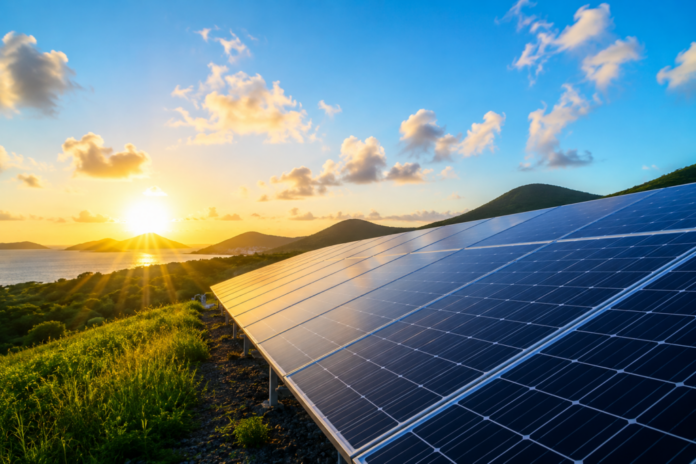
The government is exploring the development of a 30-megawatt solar plant with battery storage and has held discussions with a Chinese entity while seeking proposals from other potential suppliers.
Battery storage would allow electricity generated during periods of strong sunlight to be retained and supplied when solar production declines.
The renewable-energy transition is intended to reduce fuel imports, improve energy security and potentially lower electricity-generation costs over time.
While the original 2030 target may no longer be achievable, Browne indicated that the government remains committed to generating at least half of the country’s electricity from renewable sources.
This article was originally published by Antigua News Room. Read the original article here: Antigua and Barbuda Pushes 50% Renewable-Energy Target Back to 2035.