

There comes a time when a country has to stop looking at every issue through political colours and begin to look beyond politics to the bigger picture. I believe Antigua and Barbuda has reached that point. We are living through an extraordinarily difficult period internationally, where decisions made thousands of miles away can reach directly into our pockets, our security and our future. Yet too much of our national conversation continues to revolve around who can score the next political point and who can find someone locally to blame.
Recently, I heard the question asked: what does war or destabilization in another country have to do with Antigua and Barbuda? The answer is quite simple: a great deal. Antigua and Barbuda does not produce oil. We import fuel, food and countless other necessities. When oil producing regions become unstable, international shipping is disrupted, energy prices increase or conflict affects global trade, small importing countries eventually feel it. We do not have to be fighting the war for the war to reach our pockets. That is the reality of living in an interconnected world and, more particularly, the reality of being a small island developing state.
That does not mean our Government should escape scrutiny. There is enough happening within Antigua and Barbuda for us to question our Government, and we should. No administration should ever be beyond accountability. But accountability and blame are not the same thing. We cannot reasonably blame an administration for every consequence of an international crisis, particularly when the same pressures are being experienced elsewhere. Our responsibility as citizens is to understand the difference between what our Government can control and what it must manage because circumstances outside our borders have changed.
The same level of understanding is needed when discussing our present relationship with the United States. Much has been said about Antigua and Barbuda’s Citizenship by Investment Programme and the scrutiny it has received internationally. Questions have been raised about screening, identity verification and the security implications associated with citizenship programmes. Antigua and Barbuda has responded to international concerns by cooperating on additional safeguards and due diligence measures. I do not want the Citizenship by Investment Programme to become the centre of this discussion, however, because there is a much larger principle involved.
If another country believes it has the right to scrutinize the people holding our passports because those individuals may eventually enter its territory, then surely Antigua and Barbuda has an equal right to know exactly whom that country proposes to transfer into ours. The United States has every right to protect its borders. So do we.
Since January 1, 2026, the United States has partially suspended the issuance of new B1/B2 visitor visas and certain other visas to nationals of Antigua and Barbuda. Existing valid visas were not automatically revoked, but the restrictions on new visas have understandably caused frustration and inconvenience. Antigua and Barbuda has also been included in the United States Visa Bond Program. These measures are not unique to us. Other Caribbean and developing nations have been affected by various United States visa measures as well.
Some Antiguans and Barbudans have placed responsibility for these restrictions squarely at the feet of the current administration. Some have connected them to the Citizenship by Investment Programme. Others believe the pressure being placed upon Antigua and Barbuda is connected to our unwillingness to simply accept every demand being made of us, including the proposal concerning third country nationals.
The United States publicly gives security, screening, identity verification, immigration cooperation and other reasons for its visa policies. We should acknowledge that. We should not state as fact something that has not been established. But neither should we stop paying attention, asking questions and examining the wider circumstances surrounding the pressure being placed upon small Caribbean states.
Sometimes protecting a country comes with inconvenience. Sometimes sovereignty carries a price. Sometimes the easier decision today can become the far more expensive decision tomorrow. If protecting our long term national interest means that some of us temporarily experience greater difficulty travelling to the United States, then at the very least we should be mature enough to understand what is being negotiated before automatically blaming our Government for refusing to simply say yes. A visa is important to the person who needs to travel, and I would never dismiss that hardship. But Antigua and Barbuda is bigger than any one of us and bigger than our immediate individual convenience.
This brings us directly to the proposal involving third country nationals removed from the United States. As of September 28, no agreement had been concluded. What exists is a United States proposal and an Antigua and Barbuda counterproposal. Our Government has stated that it will not accept a standing, automatic or open ended programme, that individuals must be considered on a case by case basis, and that issues including criminal history, identity, documentation, accommodation, funding, legal status, security and onward or return responsibility must first be settled.
That is not weakness. That is what negotiation is supposed to look like.
We must also be responsible in how we discuss the people themselves. Not every person deported from the United States is a violent criminal. Not every deportee has committed an offence beyond an immigration violation. Some may simply have overstayed or otherwise fallen out of lawful immigration status. We should never label an entire group of human beings as dangerous simply because they have been deported. But acknowledging that truth does not require Antigua and Barbuda to ignore the other side of the equation.
There may also be individuals with serious criminal histories or associations. That possibility is precisely why comprehensive individual screening matters. The Trump administration itself has repeatedly used the phrase “worst of the worst” when describing people targeted in its immigration enforcement campaign. If that is the language being used by the country seeking to remove people from its territory, then small receiving countries have every reason to insist upon knowing exactly who is being proposed for transfer.
We also have to understand scale. Antigua is approximately 108 square miles and Barbuda approximately 62 square miles. We are not a country with unlimited housing, policing, healthcare, employment opportunities or social services. Numbers that may appear insignificant to a country of hundreds of millions of people can have an entirely different impact here.
Consider a hypothetical example. If an arrangement eventually resulted in ten individuals being transferred each month, that would be 120 people in one year. If that continued for five years without departures, it would amount to 600 people. The question therefore cannot simply be how many people arrive this month. We have to ask about cumulative impact. Is there a maximum number? Is there a defined duration? What is the exit mechanism? What happens when a person’s country of nationality refuses to receive that individual?
These questions become even more important because tourism is the backbone of our economy. Antigua and Barbuda depends heavily upon its reputation as a safe, stable and welcoming destination. We already have our own challenges with crime and with some young people becoming involved in criminal activity. It would therefore be irresponsible not to consider whether importing additional security risks could compound problems we are already trying to address.
Again, this does not mean assuming every person proposed for transfer is a criminal. It means recognizing that someone whose only violation was an immigration offence presents a very different consideration from someone with serious organized criminal or gang experience. In a society as small as ours, even one individual with sophisticated criminal connections, organizational experience or gang affiliations could potentially create problems disproportionate to that person’s numbers. Authorities must consider whether such an individual could recruit, influence or organize vulnerable young people already involved in criminal activity.
I am not saying that this will happen. I am saying that responsible governments do not wait for foreseeable risks to become realities before asking how those risks will be prevented.
Proper vetting therefore cannot simply mean being handed a name and an assurance. Antigua and Barbuda should know the complete criminal and immigration history of anyone proposed for transfer, whether there are known gang or organized crime affiliations, what information United States authorities possess about that individual, what documentation the person will carry and what happens if relevant information emerges after a transfer that was not disclosed beforehand.
Then there is the question of permanence. What happens after one year, five years or ten? Will these individuals have the right to work? Could residency eventually become possible? Could citizenship become possible under our existing laws? Who pays for housing, healthcare and other necessities? What happens when whatever funding accompanied the original arrangement ends? Who bears responsibility if an individual commits a serious offence after being transferred? If the person’s country of nationality refuses to accept them, are they effectively Antigua and Barbuda’s responsibility indefinitely?
Those questions must be answered before an agreement is implemented, not afterward.
This is where I believe some of our national conversation has become dangerously short sighted. We cannot reduce something with potentially long term consequences for national security, public finances, social stability and tourism to whether it is presently more difficult for an individual to obtain a visa to travel to the United States.
If the United States believes additional screening and due diligence are necessary before someone holding an Antigua and Barbuda passport enters America, then there should be nothing controversial about Antigua and Barbuda demanding equally serious due diligence before accepting someone the United States has decided to remove. As much as they have a responsibility to protect theirs, we have a responsibility to protect ours.
There is also a historical reality we should not conveniently forget. In 2018, President Donald Trump was reported by people familiar with a White House immigration meeting to have referred to Haiti and African nations using the now infamous phrase “shithole countries.” He subsequently disputed the language attributed to him. I do not raise that history to claim it proves the motive behind every policy decision being made today. It does not. But it should remind small developing nations that we cannot afford to be naive about international power or assume that larger countries will automatically place our interests alongside their own.
The United States looks after its interests. China looks after its interests. Cuba looks after its interests. Every sovereign country should. Why should Antigua and Barbuda be ashamed to do the same?
Our relationships with Cuba, China, the United States and every other international partner must ultimately be determined by what serves Antigua and Barbuda’s legitimate interests. Other countries have provided healthcare, education, infrastructure, investment, technical assistance and other forms of cooperation from which our people have benefited. If Antigua and Barbuda is being asked to reduce or abandon relationships that provide tangible benefits, then our people deserve to know what will fill those gaps.
If cooperation with Cuba in a particular area ends, what replaces it? If Chinese investment or development cooperation is reduced, who fills that space? If Antigua and Barbuda is expected to reorganize its international relationships according to another country’s strategic priorities, what guarantees exist that our needs will continue to be met?
This is not about choosing China over America or Cuba over America. It is about choosing Antigua and Barbuda.
We cannot abandon beneficial international relationships simply to satisfy another country’s geopolitical priorities without understanding what happens to our people afterward. Friendship between nations should not require one country to surrender its ability to determine what relationships are necessary for its development. Our foreign policy cannot be based upon fear. It must be based upon national interest.
This is also where our Opposition carries an enormous responsibility. Opposition is essential to democracy. It should scrutinize the Government relentlessly where scrutiny is deserved. But opposition cannot simply become an exercise in waiting for every national difficulty and calculating how much political mileage can be extracted from it. There are moments when the national interest must become larger than the next election.
If the Government’s negotiating position is inadequate, show us where. If the safeguards are insufficient, propose stronger ones. If there is a better diplomatic strategy, present it. If there are legal weaknesses, identify them. If there is another way for Antigua and Barbuda to protect its citizens while improving relations with Washington, bring it forward. That is productive opposition. A political win means very little if Antigua and Barbuda loses.
The same lesson should extend throughout the Caribbean. Small Caribbean nations dealing individually with major international powers will always negotiate from a different position than countries prepared to coordinate where their interests align. We do not have to agree on everything. We never will. But when our vulnerabilities are shared and the pressure being applied is similar, there is strength in consultation, coordination and collective diplomacy.
Had the Caribbean been able to approach some of these challenges with a stronger collective position from the beginning, our bargaining power might have looked very different. Individually, small states are easier to pressure. Together, we have a stronger voice. That is not confrontation. That is simply understanding the value of unity.
Our foreparents understood sacrifice. They struggled for self determination so that generations they would never live to see would possess the ability to make decisions for themselves. Independence cannot simply be something we celebrate every November, and sovereignty cannot simply be a word we use in speeches. Both come with responsibilities, and sometimes both come with a price.
Too often today, we approach national questions by asking, “How does this affect me?” We need to start asking another question: “How will this affect Antigua and Barbuda twenty years from now?” What country are we leaving for our children and grandchildren, and what decisions are we making for children yet unborn? There will be times when protecting their future requires some inconvenience or sacrifice from us today. Our foreparents did it for us. We must be prepared to do it for those who will come after us.
For all that we complain about Antigua and Barbuda, people continue to choose Antigua and Barbuda. People continue to visit our shores, invest here, build homes here and return here. There is something valuable about what we have built, even if we ourselves sometimes fail to recognize it. We should not gamble carelessly with that. Our tourism product matters. Our passport matters. Our security matters. Our international relationships matter. Our sovereignty matters. Most importantly, the country we leave behind matters.
This is not an argument for blindly supporting any government. Government must answer questions, be transparent about agreements negotiated in our name and be challenged when its decisions do not serve the national interest. The Opposition has an equally important responsibility to scrutinize, propose alternatives and put country before political opportunity. But we, the people, have a responsibility too. We must become more nationally aware. We must read beyond political headlines, understand what is happening beyond our shores and recognize when something before us is bigger than the next election.
We need to understand what larger countries are asking of smaller ones. We need to understand what we stand to gain, what we stand to lose and what sacrifices may sometimes be necessary to protect something greater than ourselves. We cannot control every war, every international market, every immigration policy or every decision made by a powerful foreign government. But we can control how intelligently we respond. We can ask better questions. We can demand better negotiations. We can insist upon safeguards. We can protect the relationships that serve our development while remaining open to new ones. Above all, we can stop allowing ourselves to be divided so completely by party politics that we fail to recognize when the national interest is staring us directly in the face.
We are a small nation, but that does not mean we must think small. The rest of the world is looking after its interests. It is time for us to stop fighting among ourselves long enough to look after ours.
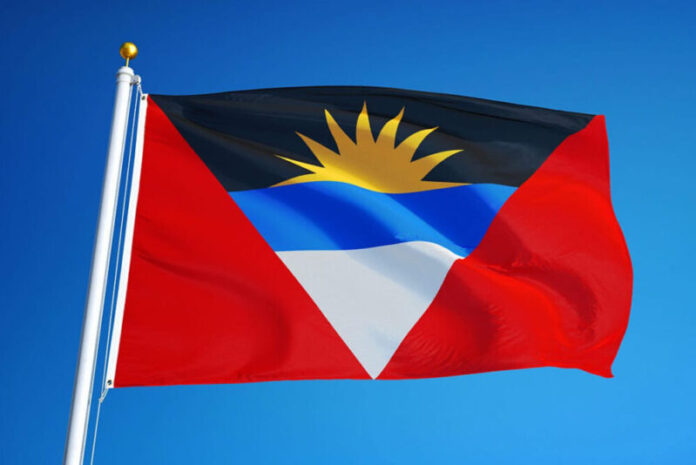
Not simply for red. Not simply for blue. For the red, blue, black, white and gold that belong to all of us.
For Antigua and Barbuda.
This article was originally published by Antigua News Room. Read the original article here: OPINION: When National Interest Must Come Before Politics.