

Crime in Latin America and the Caribbean is no longer only a matter for the police. It is weakening societies, draining economies and obstructing development. It is also testing public confidence in courts, governments and democratic institutions.
The figures are alarming. The Economic Commission for Latin America and the Caribbean reports that the region, with only about 9 per cent of the world’s population, accounts for almost one-third of all homicides. In 2021 alone, at least 89,100 people were killed with firearms.
Behind every statistic is a human tragedy: a child without a parent, a mother mourning a son, a woman trapped with an abuser, or a family driven from its community. Fear changes how people live. Children are kept indoors. Businesses close early. Witnesses remain silent. Communities retreat behind bars and locked gates.
Killings are not isolated acts. They are the visible result of a larger system involving illegal weapons, criminal finance, compromised institutions and persons who profit without approaching the scene.
For women and children, institutional failure is especially dangerous. When complaints are disregarded, investigations are delayed and protective orders are not enforced, vulnerable persons are left within reach of their abusers. Impunity then becomes an invitation to repeat the offence.
The criminal justice system is a chain. Police, prosecutors, courts, prisons and rehabilitation services are all links in it. When any link breaks, the entire system is weakened.
Public impatience is now producing open confrontation between political leaders and the judiciary. In Costa Rica, where drug-related violence has risen sharply, President Laura Fernández has accused the judiciary of being infiltrated by organised crime. Her Security Minister has said that only 38 per cent of homicides result in convictions.
Judicial authorities have denied the allegations and warned that budget reductions will further weaken their capacity. That dispute contains a lesson for the entire region. Courts cannot retain public confidence if criminal cases collapse, convictions are rare and allegations of corruption are not credibly investigated. But governments have to demand accountability while providing courts with resources and maintaining judicial independence, consistent with clear rules.
In Antigua and Barbuda, Prime Minister Gaston Browne recently expressed strong concern about what he regarded as an unduly lenient judicial approach in a firearms case. His intervention reflected a wider public anxiety across the Caribbean: persons accused of serious firearms offences must be dealt with firmly and expeditiously, in accordance with law.
Criminal justice systems must demonstrate that unlawful possession and trafficking will attract consequences capable of deterring others. That requires clear laws, competent police investigations, forensic services, effective prosecution and courts equipped to dispose of cases promptly. Every part of the system must function if public confidence is to be maintained.
The 2023 Caribbean Firearms Study, jointly produced by CARICOM IMPACS and the Small Arms Survey, found that the Caribbean’s violent-death rate was almost three times the global average. Firearms were used in more than half of all homicides and, in some countries, in about 90 per cent.
Technology must also become a much stronger part of the region’s defence. The United Nations Office on Drugs and Crime, in its World Drug Report 2026, shows that land and maritime routes dominate the movement of illicit drugs by volume, depending on the substance. Caribbean seaports, airports and unofficial landing points are therefore front lines in the struggle against organised crime.
Governments should invest in cargo scanners, container-tracking and surveillance systems, automatic number-plate recognition, canine units and advance passenger and cargo information. But machinery must be supported by intelligence-led risk assessment, trained and vetted officers, secure port access and regional information-sharing. A scanner within a compromised system will detect only what criminals permit it to find.
According to the Inter-American Development Bank, the direct costs of crime and violence in Latin America and the Caribbean amounted to approximately 3.4 per cent of regional GDP in 2022. That was equivalent to 78 per cent of all public spending on education across the region. Businesses lose sales, governments spend scarce resources on policing, prisons and emergency health care, and families lose income when breadwinners are killed or disabled.
Tourism and investment are not automatically destroyed by every increase in crime. But once international headlines, travel advisories and social media create an image of uncontrolled violence, tourists, airlines, insurers and investors reconsider their exposure. For small economies heavily dependent on tourism, the consequences could be unemployment, falling revenues and deeper poverty.
The guns themselves also tell only part of the story. A young man in a poor community does not manufacture an assault rifle, import ammunition, arrange international drug shipments or launder large sums of money. Someone finances these operations. Someone supplies vehicles, safe houses, communications equipment and protection. Someone converts criminal proceeds into apparently legitimate wealth.
Trinidad and Tobago’s Prime Minister, Kamla Persad-Bissessar, recently warned that the fight against crime must extend beyond street gangs to wealthy and influential persons suspected of facilitating organised criminal activity. She alleged that drug and firearms networks operate from affluent communities and that businesses and financial intermediaries may be involved in moving and laundering criminal proceeds.
Haiti shows how gangs can become economic and territorial powers when criminal finance, political protection, illegal weapons and institutional weakness converge. Ecuador shows how ports, prisons and local gangs can be absorbed into international cocaine networks. Trinidad and Tobago shows that substantial national resources offer no immunity when firearms, narcotics, gangs and illicit finance reinforce one another.
Governments cannot end this crisis by pursuing only the gunmen. Every major investigation involving gangs, drugs, firearms or contract killings should include a parallel financial investigation. Authorities must identify the beneficial owners of companies, scrutinise suspicious transactions, strengthen tax and customs enforcement, freeze criminal assets and cooperate across borders.
At the same time, justice systems must be strengthened. Police need training and forensic resources. Prosecutors require manageable caseloads. Witnesses must be protected. Courts must dispose of cases promptly and explain their decisions clearly. Judges must remain independent, but judicial independence cannot mean immunity from transparent standards of competence, integrity and accountability.
Crime is not separate from development. A society cannot achieve sustainable development when citizens are afraid, businesses are burdened by security costs, young people are recruited by gangs and courts cannot deliver timely justice.
The region must confront three connected failures: justice systems that do not deter offenders, illicit weapons that make crime more lethal, and financial systems that conceal the persons who organise and profit from it.
The gunman must be caught. But so must those who procured the weapon, financed the shipment, laundered the proceeds and corrupted the institutions that should have stopped them.
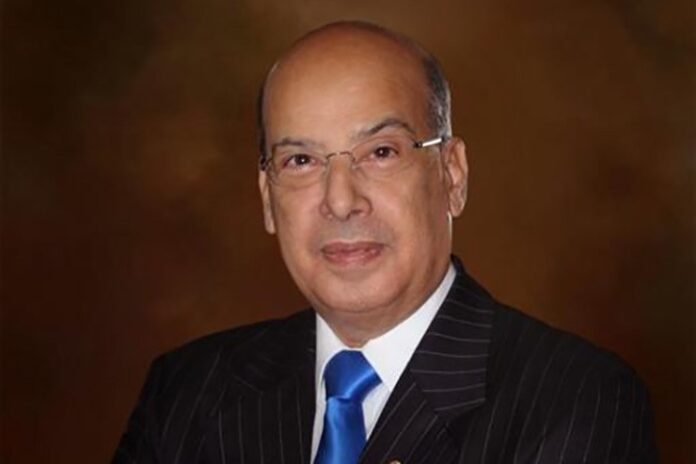
(The writer is Antigua and Barbuda’s Ambassador to the United States and the Organization of American States. He is also Chancellor of the University of Guyana and current Chair of the Inter-American Council for Integral Development. The views expressed are his own.)
This article was originally published by Antigua News Room. Read the original article here: COMMENTARY: Crime thrives on weak justice, illegal guns and dirty money.