
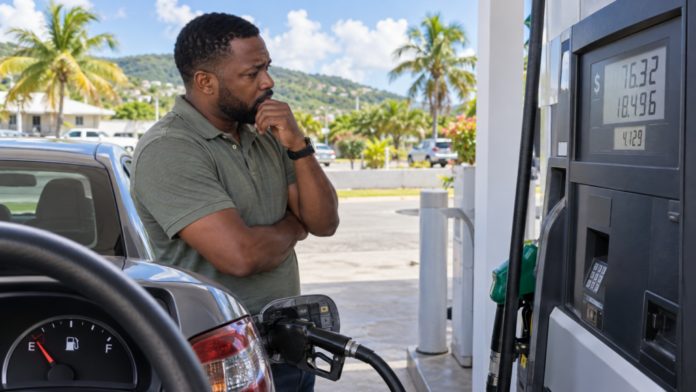

Prime Minister Gaston Browne is urging motorists to reduce unnecessary fuel consumption as rising international petroleum prices threaten to trigger further increases at the pumps in Antigua and Barbuda.
Speaking on the Browne and Browne Show on Saturday, Browne warned that the government has reached the limit of its ability to protect consumers by absorbing higher fuel costs.
“We are asking our people to be a little more conservative,” Browne said, encouraging motorists to conserve fuel and use it responsibly.
His appeal followed a recent EC$2-per-gallon increase in gasoline and diesel prices. Browne said the adjustment was necessary to cover higher import costs and prevent the government’s existing fuel subsidy from increasing further.
According to the prime minister, international petroleum prices have risen sharply because of continuing geopolitical tensions, including the conflict involving Iran.
He said he regularly monitors the price of Brent crude oil and that recent movements in the international market prompted the government’s warning that local fuel prices would have to be adjusted.
“These are not things that we have any control over,” Browne said.
The prime minister warned that consumers could face additional increases if international prices continue climbing.
“We have absolutely no choice but to continue to increase the price of petroleum products,” he said.
Browne maintained that fuel prices in Antigua and Barbuda remain among the lowest in the Caribbean, despite the country producing no oil. He said the lower prices resulted from deliberate government intervention aimed at shielding households and businesses from the full impact of international increases.
The government previously removed the 15% fuel consumption tax, which Browne said would ordinarily generate approximately EC$4 million each month. It also paid millions of dollars to the West Indies Oil Company to keep retail prices below their full market level.
Browne said those measures had cost the government more than EC$40 million and forced it to postpone payment of other obligations.
He disclosed that the government was subsequently required to borrow more than EC$30 million to settle a debt that could otherwise have been paid using revenue from the West Indies Oil Company.
The prime minister said the administration had not subsidized fuel because it had surplus cash but had instead redirected money from other commitments to protect consumers.
“What we did, we robbed Peter to pay Paul,” Browne said.
He maintained that the government remains committed to providing relief but cautioned that its financial capacity is limited and that motorists must prepare for the possibility of further price increases.
This article was originally published by Antigua News Room. Read the original article here: Motorists Urged to Conserve Fuel as International Prices Rise.