
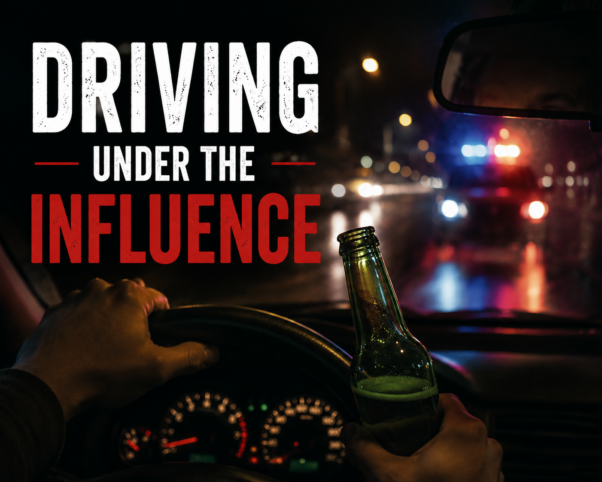

Driving Under the Influence of Indifference:
Why Lethal Recklessness on Our Roads Must Be Treated as Murder
by Gavin V. Emmanuel
The conversation surrounding road safety in Antigua and Barbuda has reached a critical tipping point. For too long, our legal system has treated vehicular fatalities through a lens of tragic inevitability rather than criminal accountability. When a motorist climbs behind the wheel of a two-ton machine while under the influence, engages in street racing, or drives at speeds that turn a vehicle into a missile, the resulting death is not an “accident.” It is a choice.
While recent legislative discussions and bills indicate a growing awareness that our current remedies do not go far enough, we must confront an uncomfortable truth: our laws still protect reckless drivers from the full weight of justice. It is time to align our legal framework with international trends and common-sense morality. We must make it legally possible to charge a motorist who kills out of extreme, depraved recklessness with murder.
Currently, the default recourse for a fatal collision caused by egregious recklessness under our laws is typically a charge of causing death by dangerous driving or manslaughter. While these charges carry penalties, they fail to capture the moral culpability of the offender. The core issue lies in how we view intent. Traditional murder requires premeditation or an explicit intent to kill. However, criminal law globally has long recognized the concept of implied malice or a depraved heart. This occurs when a person acts with a total, callous disregard for human life, knowing their actions will likely cause death or grievous bodily harm.
If a person fires a gun into a crowded room without aiming at anyone in particular, and someone dies, we charge them with murder. Why, then, do we lower the bar when the weapon of choice has four wheels and an engine? When a driver accelerates down a crowded thoroughfare at double the speed limit, ignoring traffic signals, they are effectively firing a weapon into our community. Treating the fallout as a mere regulatory traffic infraction or a lesser manslaughter charge diminishes the value of the lives lost on our streets.
Our nation continues to bear the deep physical and emotional scars of this legislative shortfall. The painful memory of national cyclist André Simon, who was struck down on the Sir George Walter Highway and fought a gruelling battle for his life before succumbing to his injuries, remains a stark reminder of the human cost of road violence. More recently, the tragic loss of Okeem Lightfoot, a 29-year-old employee of the National Solid Waste Management Authority whose life was cut short on the job, underscores that no one on our roads is safe from extreme negligence. When the legal system labels these profoundly reckless actions as something less than murder, it inflicts a secondary trauma on grieving families and the wider community.
The gaps in our legal framework are equally glaring when a victim miraculously survives an encounter with an egregious driver but is left with life-altering injuries. This reality was put on vivid display recently when young national cyclist Tahje Browne was severely injured during a training ride—an incident where reckless driving nearly cost him his life. Under traditional offences against the person laws, unless an explicit intent to murder can be proven, drivers in these scenarios are often slapped with minor traffic offences or mid-level assault charges.
To rectify this imbalance, our legislative updates must expand the scope of serious crimes against the person. We need a charge of vehicular attempted murder for instances where a driver uses a vehicle to intentionally target a pedestrian or another motorist. Furthermore, the law should establish aggravated vehicular assault as a felony-level charge specifically designed for drivers who cause permanent disability, disfigurement, or grievous bodily harm through extreme recklessness or driving under the influence. By elevating these charges, the law would finally acknowledge that causing severe injury with a vehicle is a violent crime, independent of standard traffic violations.
Antigua and Barbuda would not be alone in taking this definitive stance. Globally, jurisdictions are actively reforming their penal codes to bridge the gap between traffic law and violent crime. In various states across the United States, courts regularly apply concepts like “Watson Murder” or depraved heart murder to secure second-degree murder charges in fatal driving under the influence cases or extreme street racing where the driver demonstrated a conscious disregard for life. Meanwhile, the United Kingdom has modernized its severe penalties by implementing life imprisonment maximums for causing death by dangerous driving, moving closer to sentencing parity with homicide. Other Commonwealth precedents are similarly evolving their manslaughter frameworks, utilizing the “reckless indifference to human life” standard to elevate extreme vehicular cases to murder status. These legal evolutions reflect a universal realization: public education and fines are no longer enough to deter modern road violence. The law must evolve to terrify those who treat our public roads as private racetracks or personal bars or smoke lounges.
As Parliament deliberates on reforms, our lawmakers must resist the urge to pass timid, watered-down amendments. The public is tired of watching families endure the agonizing reality of seeing those responsible for destroying lives walk away with minor prison terms or mere driving bans.
Allowing a murder charge in extreme vehicular cases does not mean every tragic error on the road will be treated as a homicide. The prosecution would still bear the heavy burden of proving that the driver operated their vehicle with a level of recklessness so profound that it constituted a total abandonment of social duty and a depraved indifference to human life. Vehicles are an essential part of modern life, but driving is a privilege, not a right. When that privilege is abused to the point of lethality, the vehicle becomes a weapon, and the driver must be treated as a violent offender. It is time for our laws to reflect the true value of Antiguan and Barbudan lives. Parliament must act to give our justice system the teeth it needs to hold lethal drivers truly accountable.