
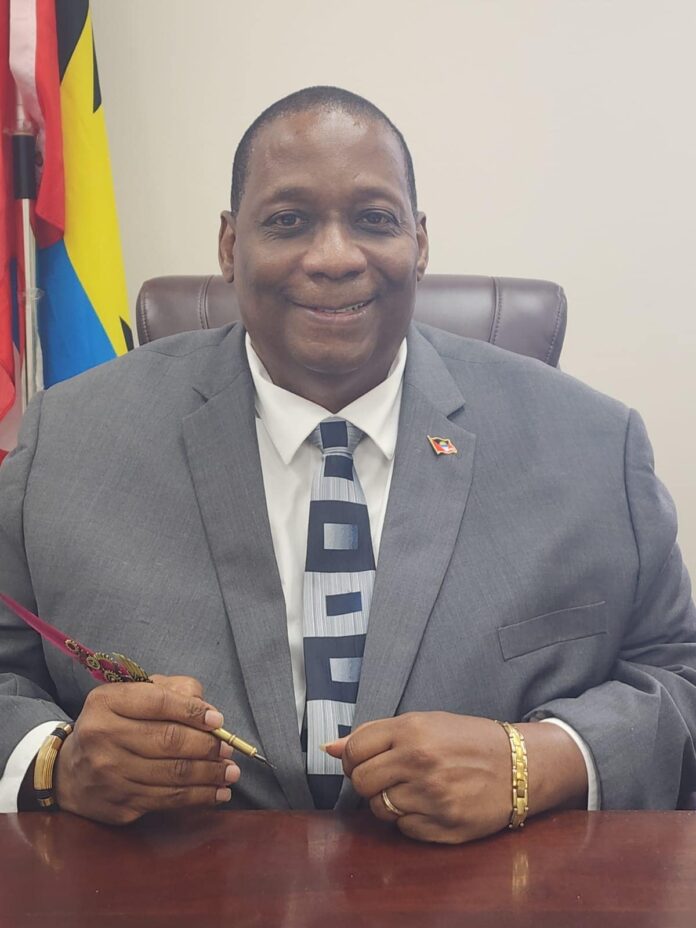

By Ambassador Dr. Clarence E Pilgrim
The current developments within the Caribbean Community (CARICOM) present not merely a challenge, but an opportunity—an opportunity to reaffirm the foundational principles upon which the Community was established and to strengthen the mechanisms that sustain its relevance and credibility.
CARICOM was founded on a shared vision, enshrined in the Revised Treaty of Chaguaramas, which emphasizes cooperation, mutual respect, and collective advancement. The Treaty speaks clearly to “the promotion of the sustained economic development of Member States” and “the strengthening of coordination of foreign and foreign economic policies.” Importantly, it also underscores that Member States are to act “in accordance with the principles of sovereign equality and the rule of law.” These provisions reflect a deeper truth: CARICOM was never intended to function merely as a mechanism for decision-making, but as a regional architecture grounded in trust, consultation, and shared responsibility.
It is therefore essential to recognize that the present disagreement, while centred on the reappointment of the Secretary-General, has evolved into a broader concern regarding procedure, communication, and documentation. In any rules-based institution, process is not peripheral—it is central to legitimacy. Where there is ambiguity, even if unintended, confidence can be affected.
At the same time, it must be acknowledged that all parties involved appear to be acting in what they perceive to be the best interest of the Community. This recognition is critical, as it allows the discussion to remain anchored in good faith rather than adversarial positioning. CARICOM is more than an institution; it is the expression of a shared Caribbean identity, forged through history, cooperation, and a common aspiration for progress.
It is also important, in the spirit of fairness and institutional respect, to acknowledge that the office of the Secretary-General must be viewed within the broader framework of institutional responsibility and continuity. The effective functioning of that office, like all organs of the Community, must be guided by the overarching imperative to safeguard unity, uphold established procedures, and maintain the confidence of Member States. In that regard, it is reasonable to expect that all necessary steps will be taken to remove any obstacle that may impede the resolution of this matter, with due regard for the interests of the Community and the integrity of its processes.
In navigating this situation, what some have described as the Pilgrim Doctrine offers a useful and practical lens. It rests on the premise that for small states, the preservation of cooperative space is not optional—it is essential.
Disagreements will arise, but they must be managed in a manner that safeguards the collective good and sustains the integration movement. The application of this approach requires that Member States consciously preserve spaces for engagement, even in moments of disagreement. It calls for restraint in public discourse, prioritization of dialogue over division, and a deliberate commitment to ensuring that no single issue is allowed to undermine the broader project of regional integration.
A constructive and peaceful resolution therefore requires a clear, stepwise approach.
First, there must be immediate de-escalation.
All parties should commit to addressing the matter within established diplomatic channels, refraining from further public escalation while discussions are ongoing. This is not a limitation on accountability, but a recognition that effective resolution is best achieved through structured engagement.
Second, there must be clarification of facts.
A special closed consultation of Heads of Government should be convened, with appropriate support from Foreign Ministers. The purpose of this meeting should be to establish a shared and agreed understanding of the sequence of events, including the nature of invitations, participation at the retreat, and the communications that have since been interpreted differently.
Third, there must be transparency through documentation.
A structured and timely disclosure of relevant documents to all Member States is essential. This should include the agenda, invitations, records or summaries of deliberations, and communications relating to the appointment process. Transparency in this regard is not only corrective—it is confidence-building.
Fourth, there must be institutional strengthening.
CARICOM should undertake a focused procedural review of its governance practices, particularly as they relate to high-level appointments and decision-making processes.
This review should clarify rules of representation, define the parameters of “Heads-only” engagements, and establish clear documentation standards to prevent future ambiguity.
Fifth, there must be forward assurance.
Following these steps, the Conference of Heads of Government should issue a unified statement reaffirming commitment to the principles of the Treaty, outlining agreed procedural improvements, and emphasizing that the responsibility for safeguarding the integrity of the Community rests collectively with all Heads of Government, who are the ultimate custodians of the regional integration movement.
The question of the Secretary-General’s tenure, while sensitive, should be approached within this structured framework. Any determination in that regard should emerge from a calm and collective process, rather than from the pressures of public discourse. The integrity of the institution must remain paramount.
Ultimately, CARICOM’s strength has never been defined by the absence of disagreement, but by its capacity to resolve differences with dignity, discipline, and purpose. The Treaty did not envision a Community free of challenge; it envisioned one capable of addressing challenges through cooperation and respect. This moment calls for leadership that rises above immediate contention and affirms the long-term interests of the region.
In the final analysis, the Caribbean does not move forward when it is divided in voice, but when it is united in purpose. This is the moment to reaffirm that unity—not in uniformity of opinion, but in commitment to a shared future. The path forward is therefore clear: engage quietly, clarify honestly, reform prudently, and proceed together—anchored in the enduring principle that the preservation of cooperative space is essential to the stability and progress of the Caribbean Community.
In so doing, the Community must remain guided by its enduring vision:
“A Community of sovereign states, united in diversity, committed to the ideals of economic integration, human and social development, and a foreign policy that enhances the international standing of the Caribbean region.”
_Author Bio_ (Column Version)
His Excellency Ambassador Dr. Clarence E. Pilgrim is a senior public servant and diplomat, serving within the Government of Antigua and Barbuda. He is also Ambassador to the Association of Caribbean States and Permanent Representative to the United Nations Industrial Development Organization (UNIDO). A transformational leader, he is the past valedictorian of the Caribbean Leadership Program and has extensive experience in public administration and regional policy development.
Disclaimer
The views expressed are those of the writer and do not necessarily reflect the official position of any government or institution.