
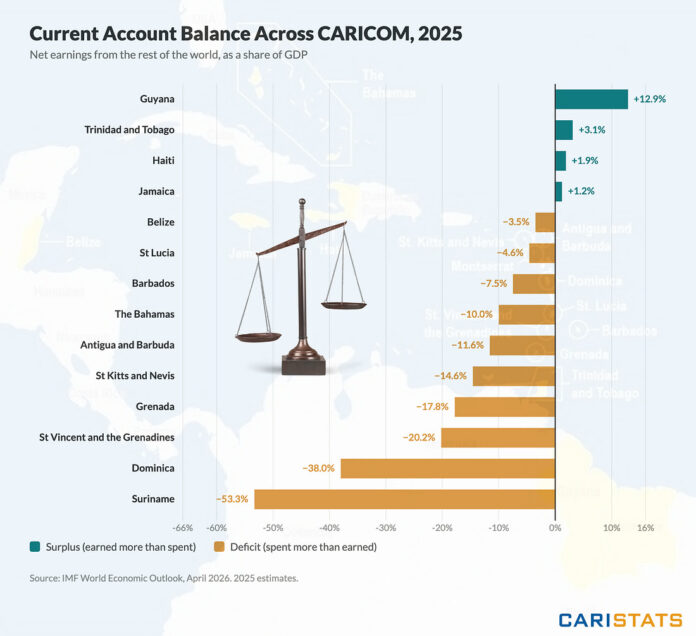

The economies in surplus run on oil, gas, or remittances. The tourism-dependent majority still imports more than it earns abroad
CARISTATS
The current account balance measures whether a country earns more from the world than it spends. It adds up what a country sells abroad, what it buys, and the money its citizens send home. In 2025, four CARICOM economies earned more than they spent. Ten spent more than they earned.
Guyana came out furthest ahead, its oil exports producing a surplus worth 12.9% of GDP. Trinidad and Tobago followed at 3.1%, also on oil and gas. Haiti and Jamaica ran smaller surpluses. Haiti’s comes almost entirely from remittances, and Jamaica’s from remittances and tourism.
The other ten member states import more than they earn abroad, with tourism receipts and foreign investment covering the shortfall. In Belize the gap was modest – it spent about 3.5% of GDP more abroad than it earned. The deepest deficits ran far larger: Dominica at 38% of GDP and Suriname at 53%. Both reflect investment and not distress – heavy spending on imported equipment for infrastructure and oil development, financed by foreign inflows.
For most of the region, spending more abroad than you earn is the normal state of affairs. The exceptions ran on oil, gas, or money sent home.
Source: IMF World Economic Outlook, April 2026. Current account balance as a share of GDP, 2025 estimates.
Pledge your support
CARISTATS is free today. But if you enjoyed this post, you can tell CARISTATS that their writing is valuable by pledging a future subscription. You won’t be charged unless they enable payments.
This article was originally published by Antigua News Room. Read the original article here: Four CARICOM Economies Earned More From the World Than They Spent in 2025.