
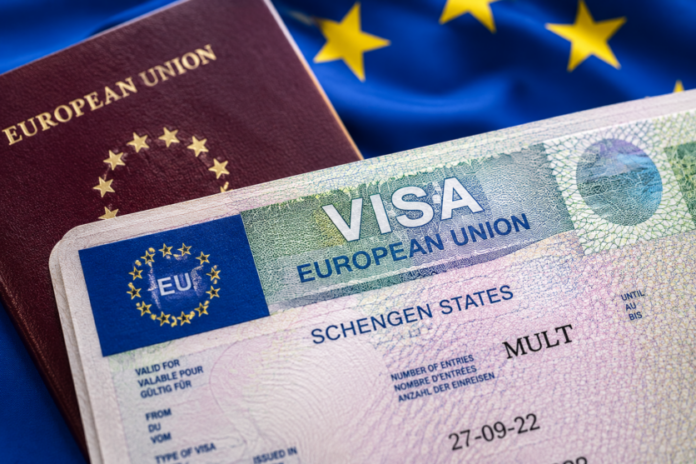

I write not as a supplicant but as an observer of a profound injustice. The European Union’s ultimatum to phase out the Citizenship by Investment (CBI) programmes in the Eastern Caribbean by 2028 is not a matter of security; it is an act of economic aggression dressed in bureaucratic language.
This decision fits a disturbing historical pattern. In the 1990s, Caribbean banana farmers were told their preferential access to European markets violated “free trade.” The WTO, at US insistence, dismantled these arrangements, devastating Windward Islands economies without offering meaningful compensation or transition pathways.
In the first decade of this century when Caribbean nations pivoted to offshore financial services as a lawful diversification strategy, they were blacklisted, greylisted and subjected to derisking that severed correspondent banking relationships essential for trade and remittances. Meanwhile, Delaware, South Dakota, London and Luxembourg continued hosting opaque financial structures without penalty.
Now the same logic targets CBI. The EU’s own Visa Suspension Mechanism report states with absolute clarity: “The operation of such programmes constitutes, in itself, a ground for suspending the visa-free status of third countries.” No documented abuse. No specific wrongdoing. The existence of the programme is now deemed an “inherent security risk.”
The EU demands that Caribbean nations abandon a revenue stream contributing 20-35% of GDP, yet continues operating its own “golden visa” and residence schemes. The United States maintains the EB-5 investor programme while imposing visa restrictions on Caribbean states.
This is not about security. If it were, the EU would subject its own member states to the same standard. Malta operated a CBI programme for years before a 2025 ECJ ruling found it breached EU law. The double standard could not be clearer: what is “strategic” when Europeans do it becomes “threatening” when Caribbean nations do.
The programme funds healthcare, education, infrastructure and disaster relief. It provides economic resilience for Small Island Developing States uniquely vulnerable to climate shocks, supply chain disruptions and global economic downturns. Asking us to abandon this pillar without “viable, concrete and credible replacement revenues” is not partnership; it is deliberate sabotage.
The EU claims to support “sustainable development” through the Samoa Agreement and Global Gateway Investment Agenda. The same partnership framework that professes commitment to Caribbean development now seeks to dismantle its most effective revenue tool.
If the EU genuinely respects Antigua and Barbuda and the countries of the Eastern Caribbean as an equal partner, it must: acknowledge the historical pattern in bananas, banking and now passports and provide meaningful compensation for economic disruption already imposed.
It must recognise that full abolition must be conditional on concrete, verifiable replacement revenues being in place before discontinuation, not on an arbitrary timeline that serves European political convenience.
It must agree to cease the neo-ethnicisation of citizenship governance. That is the implicit assumption that certain nations’ citizenship is “transactional” while others’ remains “sacred,” a postcolonial logic that limits mobility for populations from the Global South.
As a matter of course, it must offer genuine technical assistance and investment under the LACIF and Global Gateway frameworks to build alternative economic pillars before demanding the demolition of existing ones.
As an act of fairness, it must subject EU member state investor residence schemes to the same scrutiny applied to Caribbean programmes, ending the structural asymmetry that punishes small states while accommodating large financial centres.
This is the third time the EU has told Caribbean nations: “You cannot compete in this space, even if we can” . The language changes every time from “free trade,”to “financial crime,”and now “security” but the result is always the same: development pathways narrowed, economic sovereignty constrained and small states disciplined while large powers retain discretion for themselves.
Antigua and Barbuda has reformed its CBI programme, harmonised investment thresholds, strengthened due diligence. The EU acknowledges these efforts, then moves the goalposts to elimination. This is not cooperation; it is coercion.
The countries of the Eastern Caribbean are right to reject this unilateral demand. The CBI programme will continue, not from defiance but from necessity because the EU offers no credible alternative for the prosperity of these islands and their people.
A true partnership recognises the right of sovereign nations to determine their own development paths. The EU’s decision reveals that partnership, in this context, means compliance, not collaboration.
Standing in the side of truth and justice
God nar sleep
Mike Browne
This article was originally published by Antigua News Room. Read the original article here: LETTER: EU's CBI Ultimatum Threatens Caribbean Economic Sovereignty.