

SIDS Lead With Historic UN Resolution on Climate Change
A landmark United Nations resolution, led by Vanuatu and championed by Small Island Developing States, affirms the ICJ ruling that countries must address climate change with “highest ambition”
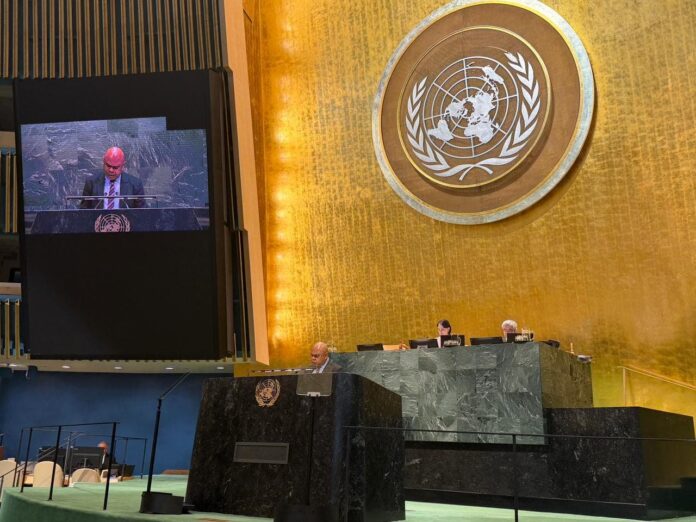
On Wednesday, the UN General Assembly took the last step in a movement born from the bold advocacy of young people in the Pacific. 141 countries voted in at the United Nations General Assembly to adopt a resolution on the International Court of Justice’s advisory opinion on the Obligations of States in respect of Climate Change. For the acutely climate-vulnerable Small Island Developing States which worked tirelessly to bring accountability to bear on large greenhouse gas emitters, this is a milestone for climate justice.
The UN resolution calls on states to implement the findings of the Advisory opinion, including that: countries have a legal obligation to address climate change; the Paris Agreement’s 1.5°C global warming limit is a binding goal; and countries must submit Nationally Determined Contributions (NDCs) that reflect their highest possible ambition, aligns with the 1.5°C goal, and curb fossil fuel use.
Of particular significance to SIDS, the resolution affirms the continuity of statehood and the legal permanence of maritime zones despite sea-level rise, a foundational principle for atoll nations and low-lying island States whose sovereignty and rights under international law will not be diminished by the climate crisis.
“This resolution transforms the Court’s advisory opinion into a political mandate backed by an overwhelming majority of the international community,” said Ambassador Ilana Seid, Chair of AOSIS. “For our members, the affirmation that our statehood and maritime rights endure is not a technicality, it is the legal foundation for our people’s future. We call on all States to act on these obligations now.”
“This is a win not just for the most vulnerable, but for our entire world,” Ambassador Seid continued. “The science is unambiguous and the law is clear: delaying climate action is not an option. This ruling is an important lever in our work to prevent big emitters from continuing to endanger our people and our planet. We are exceptionally proud of Vanuatu and all small islands whose commitment to climate accountability have demonstrated the might and moral authority of Small Island Developing States.”
Since 1990, AOSIS has represented the interests of the 39 small island and low-lying coastal developing states in international climate change, sustainable development negotiations and processes. As a voice for the vulnerable, its mandate is more than amplifying marginalised voices as it also advocates for these countries’ interests. In terms of size, AOSIS closely resembles the countries it represents on the global stage, but often punches far above its weight, negotiating historic global commitments to cut greenhouse gas emissions, among other achievements.